
5 Min Read
In the evolving world of Connecticut home design, few shifts have been as transformative as the move toward open-concept living. Once considered a modern trend, this architectural style has become a defining feature of modern Connecticut homes, reshaping how residents use and enjoy their spaces.
This article explores the purpose and popularity of open-concept living, the differences between historical and modern layouts, and how this approach fits within the context of traditional New England architecture. It also outlines key benefits, potential challenges, and expert insights for those considering a thoughtful Connecticut home remodeling project.
What you’ll learn:
- What is Open-Concept?
- Historical vs. Modern Layouts
- Benefits of Open-Concept
- Is It Right for Every Home?
- Key Considerations
- Blending Old and New
- Transform Your Home
What is Open-Concept Living?
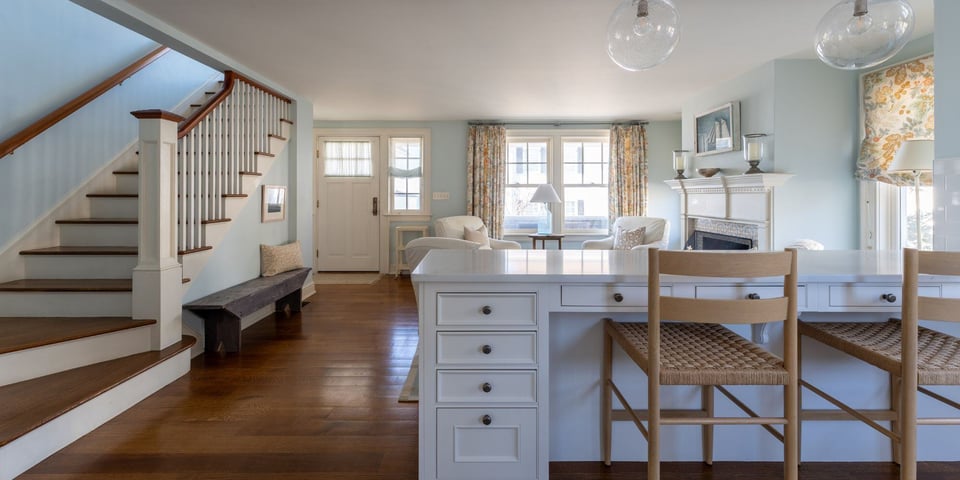
Open-concept living refers to a floor plan in which traditional barriers between major living areas, such as the kitchen, dining room, and living room, are minimized or removed. In a typical open kitchen and living room layout, these areas flow together as one continuous space, offering an uninterrupted line of sight from one function to another.
This design philosophy is rooted in simplicity and connectedness. It encourages natural light, easy circulation, and the ability to engage in multiple activities at once.
The increasing popularity of open floor plan homes reflects broader shifts in lifestyle. As modern home design trends in 2025 continue to focus on flexibility, minimalism, and wellness, the open-concept approach offers a solution that aligns with contemporary priorities.

Historical vs. Modern Designs
Connecticut’s historic homes, particularly in New England, were built with structure, formality, and function in mind. Today, homeowners are increasingly rethinking those traditional layouts to support modern living.
Traditional New England Layouts
Older homes in Connecticut often feature:
- Enclosed rooms: Each space had a dedicated purpose—kitchen, dining room, parlor—separated by doors and hallways.
- Limited sightlines: Walls divide spaces both visually and physically.
- Privacy-focused design: Formality and quiet were prioritized.
- Strategic heating: Smaller, separate rooms made heating more efficient before central systems were common.
This design approach made sense historically, but can feel segmented by today’s standards.
Modern Layouts for Today’s Living
By contrast, modern Connecticut homes reflect a lifestyle built around openness and flexibility:
- Fewer walls: Spaces like the kitchen, dining, and living areas flow together.
- More natural light: Sunlight moves freely through large, connected spaces.
- Social connectivity: Open sightlines make it easier to cook, entertain, or supervise children simultaneously.
- Flexible space usage: Zones are defined by furniture or lighting, not by walls.
These qualities support the way many homeowners live today, more casually, communally, and efficiently.
Making the Shift
Transforming a traditional floor plan into an open-concept living space often involves:
- Wall removal (with structural reinforcement when needed)
- Unified design choices to tie multiple zones together
- Thoughtful transitions that respect the home’s original architecture
For homeowners planning a Connecticut home remodeling project, the goal is rarely to erase the past. Instead, the focus is on adapting the layout to reflect modern home design trends in 2025, without compromising the charm and integrity of a historic home.
Benefits of Open Floor Plans
The benefits of open floor plans are both functional and aesthetic. When carefully designed, they enhance daily living in a variety of ways.
1. Increased Natural Light
Without walls obstructing windows or interior sightlines, natural light flows more freely through the home. This not only improves ambiance but also supports energy efficiency and overall well-being.
.jpg?width=2000&height=1000&name=Blog%20Images%20(8).jpg)
2. Enhanced Social Connection
An open kitchen and living room layout allows for easier interaction among household members and guests. Cooking, relaxing, and entertaining can happen simultaneously, without physical separation.
3. Greater Flexibility
With fewer structural divisions, open spaces are more versatile. Furniture arrangements can shift over time, adapting to new uses or lifestyles without the need for major renovations.
4. Improved Functionality
Open layouts support the flow of foot traffic and make it easier to supervise children, manage household tasks, or engage in group activities.
5. Increased Property Appeal
Luxury home remodeling buyers often prioritize open layouts in their home searches. A well-executed open-concept renovation can significantly enhance a property’s market value.
Is Open-Concept Living Right for Every Home?
While open-concept living offers many advantages, it’s not always the best fit for every home or lifestyle. Several key factors should be considered when determining whether an open-concept renovation is the right choice.
Consider Your Daily Life
Open floor plans often work well for:
- Families with young children who benefit from better supervision and shared spaces
- Entertainers who want to host without being isolated in the kitchen
- Multigenerational households where sightlines and flow improve shared use
However, for some, the lack of enclosed rooms can be a drawback. Homes with open kitchen and living room layouts may carry sound more easily, and activities in one part of the space can affect others. Those who work from home or require quiet zones may prefer more defined rooms or a hybrid approach.
Not every space needs to be fully open. For some households, a semi-open layout offers the ideal mix of connectivity and structure, especially when thoughtfully integrated into a CT home transformation.
Key Considerations When Planning an Open-Concept Renovation
An open-concept renovation requires more than simply taking down walls. It involves a comprehensive design strategy that addresses structure, functionality, and aesthetics.
Structural Engineering
Walls that divide rooms often serve as structural supports. Before altering a layout, a licensed professional must assess load-bearing components and determine if additional supports or beams are required.
Visual Continuity
In an open space, design cohesion is critical. Flooring, cabinetry, wall colors, and lighting should be selected with an eye toward continuity, creating a unified look from one area to the next.
Space Definition
Even without walls, it's possible to distinguish zones through the use of area rugs, ceiling treatments, lighting, or furniture placement. These elements help define the purpose of each space without closing it off.
Storage Solutions
Wall removal can mean a loss of built-in storage. Incorporating thoughtful cabinetry, island storage, or custom built-ins helps maintain organization within the new layout.
Acoustics and Lighting
Open areas can carry sound more easily, making material selection important for controlling acoustics. Similarly, a layered lighting plan is essential for creating ambiance and functionality throughout the space.
Blending Old and New in New England Homes
For those renovating older properties, one of the most rewarding challenges is finding the right balance between history and modernity. The best New England home renovation ideas retain character while updating function.
Start by Honoring the Home’s History
Elements worth preserving often include:
- Original wood floors or beams
- Classic moldings or casings
- Masonry fireplaces or built-ins
- Traditional window styles
These features can provide timeless warmth and a sense of place, even within a more open environment.
Introduce Modern Elements with Care
Where updates are needed, select finishes and materials that complement rather than compete. In a custom home remodeling project, this might include:
- Shaker-style cabinetry in a contemporary finish
- Stone countertops paired with vintage-inspired hardware
- Minimalist lighting set against traditional millwork
- Wide plank flooring in a natural matte finish
Use Design to Create Harmony
Even in open floor plan homes, it’s possible to maintain a sense of architectural rhythm. Consider the following design techniques to subtly define space and blend eras:
- Cased openings that nod to original room transitions
- Ceiling treatments to distinguish kitchen, dining, and living zones
- Repetition of materials (such as matching wood tones or metals) to tie old and new together
Ultimately, blending old and new comes down to restraint and thoughtfulness. The goal is not to modernize for the sake of change, but to create a home that functions beautifully today while respecting its past.
Transform Your Home with Craft
Reimagining your space starts with the right partner. At Craft Design + Build, we specialize in thoughtful, high-end renovations that honor the character of your home while introducing the best of modern Connecticut home design. From historic properties to full open-concept renovations, our team brings experience, precision, and timeless craftsmanship to every project.
If you're considering a layout transformation or exploring custom home remodeling in CT, we invite you to connect with us. Let’s design a home that reflects both your lifestyle and the legacy of New England architecture.

.jpg?width=352&name=Blog%20Images%20(5).jpg)

